
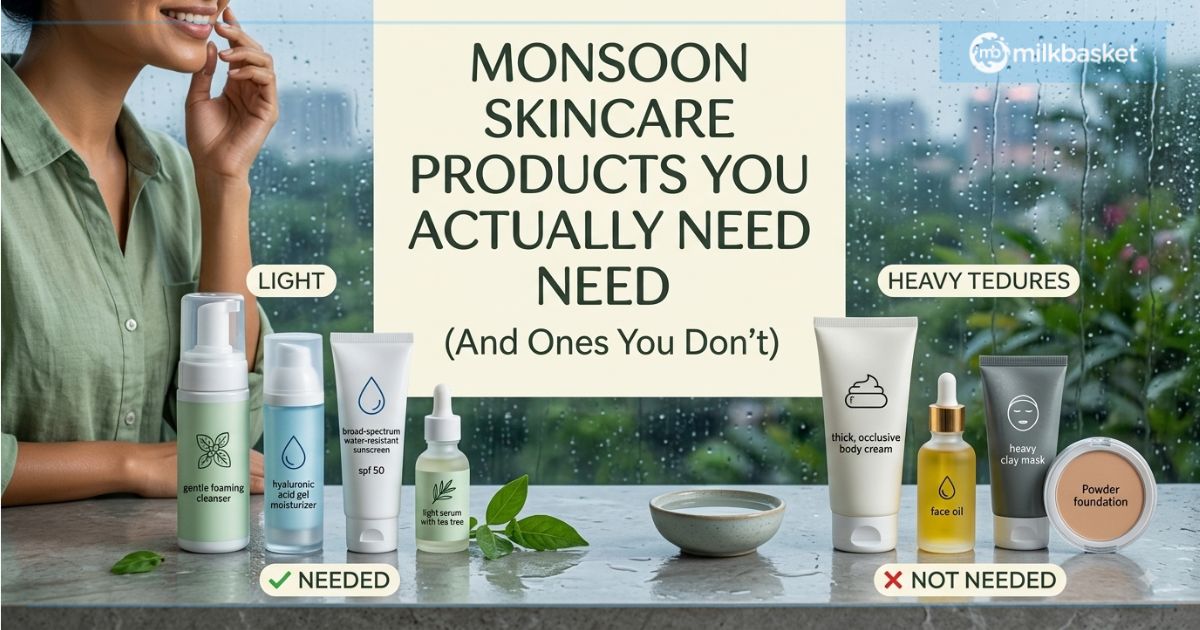
Monsoon Skincare Products You Actually Need (And the Ones You Don't)
Every June, the same thing happens. Skincare brands flood your Instagram with “monsoon must-haves,” and suddenly you’re convinced you need seventeen new products. Spoiler: you don’t. What you actually need is a stripped-down, humidity-proof routine with the right skincare tips and about five smart product swaps. That’s it. No 12-step routines. No fancy serums that cost more than your grocery bill.
And speaking of groceries, Milkbasket delivers personal care products alongside 10,000+ daily items. Buy groceries online, throw your skincare into the same cart, and everything shows up at your door by 7 AM.
What Humidity Actually Does to Your Skin
When humidity crosses 70-80%, your skin’s oil glands go into overdrive. They’re trying to protect you, but they’re overreacting. Sweat can’t evaporate because the air is already damp. So oil, sweat, dirt, and dead skin cells just sit on your face like an uninvited buffet for bacteria.
Result? Breakouts. Fungal patches. That greasy shine by noon. The itchy rash in skin folds. None of this is random. Your skin is reacting to conditions it’s not prepared for. The fix isn’t more products. It’s the right products.
Products You Should Switch TO for Monsoon
Think of this as your monsoon skincare shopping list. These are the swaps that actually matter:
- Gel-based face wash instead of cream-based. Clears oil without stripping skin. Look for salicylic acid, neem, or tea tree
- Water-based gel moisturiser instead of thick cream. Non-comedogenic is the word to look for on the label
- Antibacterial body wash instead of regular soap bars. Neem, charcoal, or tea tree variants work best in humid weather
- Lightweight SPF 50+ sunscreen instead of your heavy winter sunblock. Gel or fluid textures absorb better on sweaty skin
- Witch hazel or niacinamide toner instead of alcohol-based ones. Controls oil without destroying your skin barrier
- Antifungal dusting powder for areas prone to friction. Between toes, inner thighs, underarms
Six swaps. That’s your entire monsoon overhaul. Not sixteen. Six.
Products You Should Absolutely Skip During Rainy Season
This part is just as important. Products that seem fine but actively make things worse in humidity:
- Heavy, oil-based moisturisers (your skin doesn’t need extra oil when it’s already producing double)
- Cream-based or milky cleansers (they leave a film on skin that traps moisture and bacteria)
- Physical scrubs with beads or walnut shell (too harsh on inflamed, acne-prone monsoon skin)
- Full-coverage foundation daily (traps sweat underneath, clogs pores, melts off anyway)
- Coconut oil as moisturiser (highly comedogenic, guaranteed breakout in humid conditions)
- Expired products you’re “finishing up” (monsoon accelerates product degradation, expired = bacteria risk)
If something’s been sitting in your bathroom cabinet since last Diwali, toss it. Monsoon humidity breaks down product stability faster than you think.
The Oily Skin Survival Kit for Monsoon
Oily skin care during monsoon deserves its own section because the struggle is genuinely different. Your face is basically an oil slick by lunchtime, blotting papers run out by 3 PM, and foundation slides off like it’s trying to escape.
What actually helps:
- Clay or kaolin-based mask once a week (deep-cleans without irritation)
- Blotting sheets or rice paper at your desk for midday touch-ups
- Niacinamide serum (regulates oil production over time, not just temporarily)
- Mattifying primer under minimal makeup (if you must wear makeup)
- Switching pillowcases twice a week (oil from your face transfers to fabric every night)
- Keeping hands off your face through the day (every touch adds bacteria and oil from your fingers)
A Cautionary Tale About Ignoring Seasonal Product Swaps
A Milkbasket customer shared this story from last monsoon. Her teenage daughter refused to switch from her favourite thick moisturiser because it smelled amazing and she’d just bought a new bottle. “Waste nahi karna” was the reasoning. Understandable.
Two weeks into July, the daughter’s forehead and chin exploded with painful cystic acne. Deep, red bumps that hurt to touch. Three months of dermatologist visits and medicated creams later, the skin finally calmed down.
The doctor’s verdict? The heavy moisturiser clogged every pore in the humidity. A Rs 200 gel moisturiser would’ve prevented the whole ordeal.
Seasonal swaps aren’t a marketing gimmick. They’re a real necessity. Your skin is literally signalling what it needs through those breakouts and rashes. Ignoring those signals costs more in the long run.
Building a Monsoon Skincare Routine That Takes Under 5 Minutes
The best skincare routine is one you’ll actually follow. Here’s a realistic monsoon version:
Morning (3 minutes):
- Gel face wash → Toner on cotton pad → Gel moisturiser → Sunscreen
Evening (4 minutes):
- Micellar water to remove the day’s grime → Face wash → Toner → Treatment serum or spot cream → Night gel
Once a week:
- Clay mask (15 min) → Gentle chemical exfoliant → Done
That’s seven products total for the entire season. Morning takes three minutes. Evening takes four. Weekly add-on takes twenty. If someone says they don’t have time for this, they’re scrolling Instagram for longer than this routine takes.
Body and Feet: The Areas Most People Neglect in Monsoon
Face gets all the attention. But skin care products for the body are equally important during the rainy season. Especially feet. Think about it: your feet get wet multiple times a day. They sit in damp shoes. The skin between toes stays moist for hours.
Body care essentials for monsoon:
- Antibacterial body wash daily (not just soap; it doesn’t kill bacteria effectively)
- Antifungal foot powder after every shower
- Foot cream for cracked heels that get worse from constant wet-dry cycles
- Wearing open footwear whenever possible to let feet breathe
- Drying between toes thoroughly after bathing (towel, then air-dry)
- Changing socks mid-day if they get damp from rain or sweat
Fungal infections between toes are embarrassingly common during monsoon. And they spread. One person’s foot fungus becomes the whole family’s foot fungus through shared bathroom floors. Prevention is way easier than treatment.
Hygiene Habits That Protect Your Skin Better Than Any Product
Skincare tips aren’t just about what you put ON your skin. Daily habits quietly make or break your monsoon skin:
- Shower within 30 minutes of getting caught in rain (city rainwater + pollution = skin irritant)
- Cotton clothes only. Synthetics trap heat, sweat, and bacteria against your skin
- Wash your hands before touching your face. Every. Single. Time
- Drink 2-3 litres of water daily. Humidity tricks your brain into thinking you’re not dehydrated
- Eat seasonal fruits rich in Vitamin C (guava, orange, amla) for skin repair from within
- Sleep on a clean pillowcase. This single habit prevents more breakouts than most products
Mistakes That Make Monsoon Skin Problems Worse Instead of Better
Things people keep doing that quietly sabotage their skin all season:
- Skipping sunscreen on cloudy days (UV index stays high even behind thick clouds)
- Washing face 4-5 times daily thinking it controls oil (it triggers rebound oiliness)
- Using physical scrubs aggressively on inflamed skin (micro-tears invite more bacteria)
- Not cleaning phone screens (your phone touches every surface, then presses against your cheek)
- Ignoring early signs of fungal infection (“it’s just a rash” turns into a month-long treatment)
- Applying home remedies without patch testing (lemon juice and toothpaste on pimples? Please don’t)
Get Your Monsoon Skincare Delivered with Milkbasket
Milkbasket stocks face wash, body wash, moisturiser, sunscreen, antifungal powder, and a full range of skincare products, alongside 10,000+ grocery items. One cart for your kitchen and your bathroom shelf.
Enjoy grocery shopping delivery that handles everything. Deliver groceries and personal care to your door by 7 AM. No minimum order. No delivery charges. Download the Milkbasket app and face this monsoon with skin that’s actually prepared for it.
Author

Categories
Popular Posts
-

4 Eco-Friendly Decorations for Ganesh Chaturthi
Spread the loveLooking for sustainable eco Ganpati decoration ideas as Ganesh Chaturthi approaches on August 26, 2025? You’re not alone in wanting to celebrate Lord Ganesha while protecting our environment. This festival season, you can create beautiful decorations that honor tradition without harming the environment. Milkbasket understands your need for convenient online grocery delivery during […]
19 Aug 2025 read More... -
Milkbasket – A Revolution In The Online Grocery Delivery Services In India
Spread the loveThere’s no denying the fact that the pandemic has drastically changed the way people spend their time online, buying everything through various online retail platforms with the convenience of home deliveries in India. Milkbasket, with it’s features has proven to be a revolution in the online grocery delivery services in India. While stepping […]
08 Jul 2022 read More... -
Milkbasket’s Latest DVC Campaign Is Out, And It’s Quirky And Relatable As Heck!
Spread the loveThe year 2021 was all about patience, resilience, and the grind it takes to get back up from a worldwide slump that the COVID-19 pandemic had hit us with. It made us all revisit our roots, recalibrate our priorities, and strengthen our foundations. With the better part of 2022 gone into slowly spreading […]
28 Sep 2022 read More... -
Your Trustworthy Guide To The Best Coffee Brands In India You Can Try
Spread the loveIf you’re a coffee lover, you know that coffee isn’t just a beverage. It’s a feeling, a good feeling. No, it’s a great feeling! One of the best feelings, in fact. Many songs and poems have been written to romanticize this delicious and invigorating drink. Although coffee in any form or recipe tastes […]
12 Aug 2022 read More...