
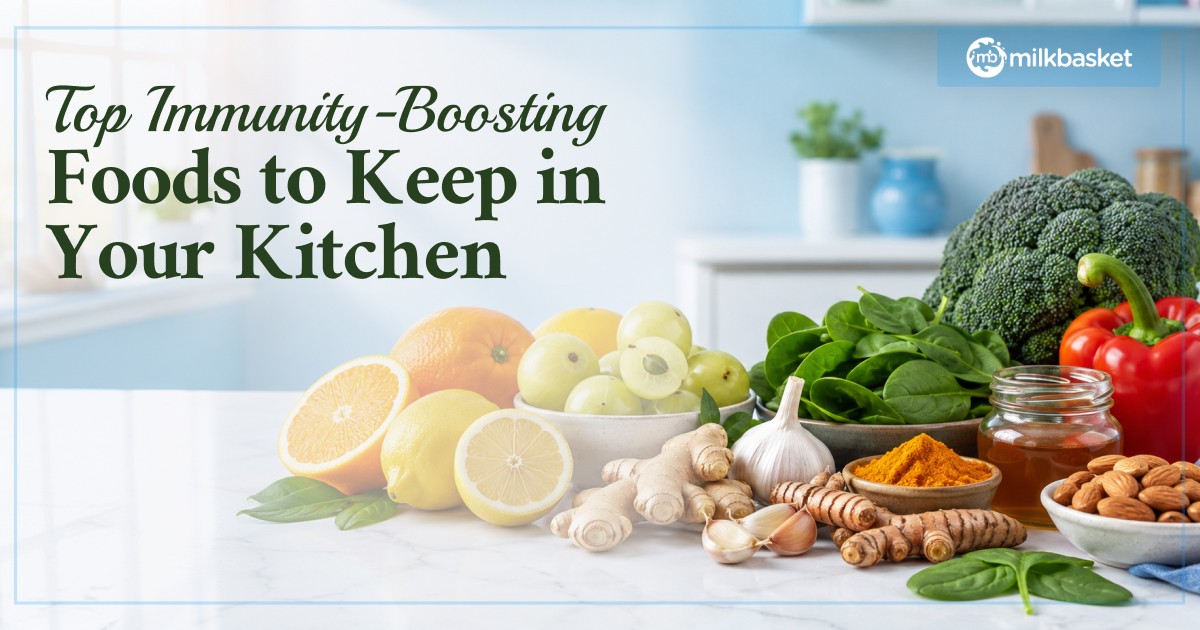
Top Immunity-Boosting Foods to Keep in Your Kitchen
A strong immune system is one of the body’s most important natural defense mechanisms. It works continuously to protect the body from infections, support recovery, and maintain overall health. While no single food can guarantee immunity or prevent illness, a balanced diet filled with essential vitamins, minerals, antioxidants, healthy fats, and quality protein can help support normal immune function.
The good news is that you don’t need complicated ingredients or expensive superfoods to build a nourishing kitchen. Many everyday fruits, vegetables, grains, nuts, seeds, dairy products, and other staples can contribute to a well-rounded eating pattern.
From citrus fruits and colourful vegetables to garlic, ginger, nuts, seeds, eggs, and legumes, there are plenty of immunity-boosting foods you can easily add to everyday meals. Keeping these ingredients readily available makes it easier to choose nutritious meals and snacks throughout the week.
Why Immunity-Boosting Foods Are Essential for Everyday Health
The immune system is a complex network involving cells, tissues, organs, and proteins that work together to defend the body. For this system to function properly, it needs a consistent supply of nutrients.
Vitamins such as vitamin C, vitamin A, vitamin D, and vitamin E, along with minerals such as zinc and selenium, play important roles in maintaining normal immune function. Protein is also essential because the body uses amino acids to build and maintain immune cells and other important proteins.
This is why eating a variety of nutrient-dense foods is more beneficial than focusing on one “miracle” ingredient. A colourful plate containing vegetables, fruits, whole grains, protein sources, and healthy fats can provide a broader range of nutrients.
Foods containing antioxidants are also valuable components of a balanced diet. Antioxidants help protect cells from oxidative stress, while naturally occurring compounds in certain foods may support the body’s normal inflammatory response.
Instead of waiting for seasonal illnesses to think about nutrition, make nourishing foods part of your everyday routine. Simple habits such as adding fruit to breakfast, including vegetables at lunch and dinner, choosing nuts as a snack, and consuming adequate protein can make a meaningful difference to overall dietary quality.
How to Increase Immunity with Food: The Basics of a Strong Diet
If you’re wondering how to increase immunity with food, start with variety, balance, and consistency rather than relying on individual ingredients.
A strong everyday diet should include:
- A variety of colourful fruits and vegetables
- Adequate protein from plant and animal sources
- Whole grains and other fibre-rich carbohydrates
- Nuts and seeds
- Healthy fats
- Fermented or probiotic-containing foods where suitable
- Plenty of water and other nutritious fluids
One useful approach is to eat foods from different groups throughout the day. For breakfast, you could have oats with fruit and nuts. Lunch could include dal, vegetables, brown rice or roti, and curd. A snack could be fruit with a handful of nuts, while dinner might include eggs, paneer, tofu, fish, chicken, or legumes alongside vegetables.
These combinations provide different nutrients that work together to support overall health.
It’s also important to remember that immune health isn’t determined by diet alone. Adequate sleep, regular physical activity, stress management, hydration, and good hygiene all contribute to general wellness.
The goal isn’t perfection. The goal is to make nutritious choices easier and more consistent.
Top Immunity Boosting Foods Every Kitchen Should Have
A well-stocked kitchen can make healthy eating much simpler. Consider keeping these versatile ingredients available:
Citrus fruits: Oranges, sweet lime, lemons, grapefruit, and other citrus fruits provide vitamin C and can brighten up meals, salads, and beverages.
Leafy greens: Spinach, methi, kale, and other greens contain vitamins, minerals, fibre, and plant compounds.
Garlic: A versatile kitchen staple that contains sulphur-containing compounds and adds flavour to curries, soups, stir-fries, and roasted vegetables.
Ginger: Fresh ginger can be used in teas, curries, soups, marinades, and stir-fries.
Nuts and seeds: Almonds, walnuts, pumpkin seeds, sunflower seeds, and chia seeds provide nutrients, healthy fats, and protein.
Legumes: Lentils, chickpeas, kidney beans, black beans, and other pulses are convenient sources of plant protein and fibre.
Eggs: Eggs provide high-quality protein along with several vitamins and minerals.
Yogurt and curd: These can provide protein and, depending on the product, beneficial live cultures.
Colourful vegetables: Carrots, bell peppers, tomatoes, broccoli, beetroot, and sweet potatoes bring different vitamins, minerals, fibre, and plant compounds to your diet.
Whole grains: Oats, brown rice, whole wheat, quinoa, and millets can contribute fibre, vitamins, minerals, and sustained energy.
Having these ingredients at home can help you create nutritious meals without requiring elaborate preparation.
Citrus Fruits for Immunity: Vitamin C-Packed Choices
When discussing citrus fruits for immunity, oranges, lemons, sweet limes, grapefruit, and mandarins are among the most familiar choices. These fruits are particularly well known for their vitamin C content.
Vitamin C contributes to normal immune system function and also acts as an antioxidant. Since the body doesn’t produce vitamin C on its own, it needs to be obtained through the diet.
Adding citrus fruit to your routine is easy. Enjoy an orange as a snack, add lemon juice to salads, use sweet lime in a refreshing beverage, or combine citrus segments with other fruits for a colourful bowl.
However, citrus fruits aren’t the only sources of vitamin C. Guava, amla, kiwi, strawberries, tomatoes, and several vegetables can also contribute vitamin C to your diet.
For the best nutritional variety, think beyond fruit juice. Whole fruits provide fibre and can be more filling than juices. Including a variety of fruits and vegetables across the week is a better approach than depending on one source.
A simple fruit bowl containing oranges, guava, berries, or seasonal produce can become one of the easiest healthy snack options in your kitchen.
Foods Rich in Antioxidants That Help Support Immune Function
A diet featuring foods rich in antioxidants can help the body manage oxidative stress. Antioxidants are compounds found naturally in many fruits, vegetables, nuts, seeds, herbs, and other plant foods.
Colour is a useful way to increase variety. Different plant foods contain different naturally occurring compounds, so aim for a rainbow of ingredients rather than eating the same vegetables every day.
Some excellent choices include:
- Berries: Strawberries, blueberries, raspberries, and other berries contain various antioxidant compounds.
- Tomatoes: A versatile source of lycopene and other nutrients.
- Carrots: Rich in carotenoids that the body can use to support vitamin A needs.
- Spinach: Provides several vitamins, minerals, and plant compounds.
- Beetroot: Adds colour and naturally occurring plant compounds to meals.
- Nuts: Almonds and walnuts provide vitamin E, healthy fats, and other nutrients.
- Seeds: Pumpkin, sunflower, and chia seeds can add nutrients and texture to meals.
- Green tea: Contains naturally occurring polyphenols.
One of the easiest ways to include foods rich in antioxidants is to add them to meals you already enjoy. Top oatmeal with berries and seeds, add spinach to an omelette, include tomatoes in sandwiches, or make a colourful salad with carrots, beetroot, cucumber, and leafy greens.
Remember that antioxidants aren’t a substitute for a balanced diet. Their value comes from regularly consuming a variety of whole and minimally processed foods.
Anti-Inflammatory Foods That Promote Overall Wellness
Inflammation is a natural part of the body’s response to injury and other challenges. However, supporting a balanced inflammatory response is an important part of overall health.
A nutritious eating pattern can include several anti-inflammatory foods that provide fibre, healthy fats, antioxidants, vitamins, and minerals.
Some options to consider include:
Ginger: Fresh ginger contains naturally occurring compounds and can be added to curries, soups, teas, and stir-fries.
Turmeric: A familiar Indian spice containing curcumin, a naturally occurring plant compound. Combining turmeric with black pepper and healthy fats is a common culinary approach.
Fatty fish: Salmon, sardines, and mackerel provide omega-3 fatty acids, which are important components of a balanced diet.
Nuts: Walnuts and almonds provide healthy fats and other beneficial nutrients.
Leafy greens: Spinach and other greens contribute fibre, vitamins, minerals, and plant compounds.
Berries and colourful fruits: Their range of naturally occurring plant compounds makes them useful additions to a varied diet.
Extra-virgin olive oil: A source of monounsaturated fat and plant compounds that can fit into a balanced eating pattern.
Including anti-inflammatory foods doesn’t mean following a restrictive diet. Instead, focus on adding more whole foods to meals and reducing excessive reliance on highly processed foods, added sugars, and unhealthy fats.
For example, replace a heavily processed snack with fruit and nuts, add vegetables to your lunch, or use ginger and turmeric to flavour homemade dishes.
Protein-Rich Foods That Strengthen the Body’s Natural Defenses
Protein is an essential nutrient involved in building and repairing tissues and supporting many processes throughout the body. It is also important for maintaining immune cells and other proteins involved in immune responses.
Including enough protein-rich foods in your diet can therefore be an important part of overall nutritional health.
Good options include:
- Eggs
- Milk and yogurt
- Paneer
- Fish
- Chicken
- Lean meats
- Lentils and dals
- Chickpeas
- Kidney beans
- Soybeans and tofu
- Nuts and seeds
- Quinoa
Plant-based eaters can combine different protein sources across the day to create a varied diet. Dal with rice, chickpeas with roti, or beans with whole grains can make satisfying meals while adding important nutrients.
For breakfast, try eggs with whole-grain toast, vegetable poha with peanuts, or oats topped with nuts and seeds. For lunch, dal, rajma, chole, paneer, tofu, or grilled chicken can provide protein alongside vegetables and whole grains.
These are also useful foundations for healthy lunch ideas that are easy to customise according to dietary preferences.
When choosing protein-rich foods, variety matters. Different foods provide different amino acids and micronutrients, so rotating between legumes, dairy, eggs, nuts, seeds, and other protein sources can make your overall diet more diverse.
Protein is particularly relevant for growing children and teenagers because it contributes to normal growth and development. Foods for healthy growth should ideally be part of a balanced eating pattern that includes protein, fruits, vegetables, whole grains, and healthy fats.
Healthy Foods to Eat Daily for a Balanced Routine
Building your diet around healthy foods to eat daily doesn’t have to involve complicated recipes. Start with simple combinations that include several food groups.
A balanced breakfast might include oats, milk, banana, nuts, and seeds. Lunch could feature dal, roti, vegetables, curd, and a side salad. For an evening snack, choose fruit, yogurt, roasted chickpeas, or nuts. Dinner could include a protein source, vegetables, and whole grains.
Here are a few easy habits to try:
- Add at least one fruit to your daily routine.
- Include vegetables in both lunch and dinner.
- Add a protein source to every major meal.
- Keep nuts and seeds available for convenient snacks.
- Choose whole grains more often.
- Drink enough water throughout the day.
- Rotate ingredients to increase dietary variety.
These habits can support wellness nutrition by making nutrient-dense foods a regular part of your lifestyle instead of an occasional choice.
Smart Ways to Stock Your Kitchen
Healthy eating becomes easier when nutritious ingredients are readily available. Planning your grocery purchases around staple food groups can help reduce last-minute unhealthy choices.
You can use online grocery shopping to conveniently stock fruits, vegetables, dairy products, grains, pulses, nuts, seeds, spices, and other kitchen essentials. Make a weekly shopping list based on meals you expect to prepare rather than buying ingredients without a plan.
If you’re looking for fresh produce, fruits and vegetables delivery can also make it easier to keep seasonal ingredients available at home.
A practical kitchen stock could include:
- Seasonal fruits
- Leafy greens
- Tomatoes and carrots
- Citrus fruits
- Eggs
- Milk and curd
- Paneer or tofu
- Dal and beans
- Oats and whole grains
- Almonds and walnuts
- Chia and pumpkin seeds
- Ginger and garlic
- Turmeric and other spices
With these basics on hand, preparing nutritious meals becomes significantly more convenient.
Easy Meal Ideas to Add More Immune-Supporting Foods
You don’t need elaborate recipes to include foods that boost immunity in your meals. Small additions can make everyday dishes more nutrient-dense.
For breakfast, prepare overnight oats with yogurt, berries, chia seeds, and almonds. Alternatively, make a vegetable omelette with spinach and tomatoes.
For lunch, try dal with brown rice and a colourful vegetable salad. Another option is a chickpea or paneer bowl with leafy greens, tomatoes, carrots, and a lemon dressing.
For an evening snack, pair fruit with nuts or have yogurt topped with seeds.
For dinner, prepare grilled fish or tofu with sautéed vegetables and whole grains. A comforting lentil soup with vegetables can also be a simple option.
These combinations demonstrate how foods that boost immunity can be incorporated into familiar meals without dramatically changing your eating habits.
Make Immunity-Supporting Nutrition Part of Everyday Life
A healthy immune system depends on many factors, and nutrition is one important piece of the bigger picture. Instead of searching for one magical ingredient, build your meals around variety and nutrient density.
Include citrus fruits and other colourful produce for vitamins and plant compounds. Add nuts, seeds, whole grains, and legumes for fibre and nutrients. Choose quality protein sources throughout the day and use ingredients such as ginger, garlic, and turmeric to add flavour while increasing dietary variety.
The best immunity-boosting foods are often simple ingredients you can use regularly. When your kitchen is stocked with fruits, vegetables, protein sources, whole grains, nuts, seeds, and nutritious staples, making balanced choices becomes much easier.
Ultimately, healthy eating is about consistency rather than perfection. Combine a diverse diet with adequate sleep, hydration, physical activity, and other healthy lifestyle habits to support your overall well-being.
So, the next time you plan your grocery run, think beyond what’s on your immediate shopping list. Stock your kitchen with nourishing everyday ingredients, explore seasonal produce, and make nutritious meals a natural part of your routine. With the right ingredients within reach, supporting your body’s natural defenses can be as simple as cooking, eating, and enjoying a colourful, balanced meal.
Frequently Asked Questions
1. What are the best immunity-boosting foods?
Some of the best foods to include in a balanced diet for immune health are citrus fruits, leafy green vegetables, berries, tomatoes, carrots, garlic, ginger, nuts, seeds, whole grains, legumes, eggs, dairy products, fish, and other quality protein sources. No single food can “boost” immunity on its own, so variety is important.
2. How can I increase immunity with food?
To understand how to increase immunity with food, focus on eating a varied diet containing fruits, vegetables, whole grains, legumes, healthy fats and adequate protein. Nutrients including vitamins A, C, D and E, zinc and selenium are important for normal immune function.
3. Which fruits are good for immunity?
Citrus fruits such as oranges, lemons, sweet lime, grapefruit and mandarins are good sources of vitamin C. Other fruits and vegetables, including guava, kiwi, strawberries, tomatoes and bell peppers, can also contribute vitamin C.
4. Are citrus fruits good for the immune system?
Yes. Citrus fruits provide vitamin C, an essential nutrient that supports normal immune function and also acts as an antioxidant. Including a variety of fruits and vegetables is a better approach than relying on citrus fruits alone.
5. What are some foods rich in antioxidants?
Berries, tomatoes, leafy greens, carrots, citrus fruits, nuts, seeds, sweet potatoes and colourful vegetables contain various nutrients and naturally occurring plant compounds with antioxidant activity. Eating a variety of colourful fruits and vegetables helps provide a broader mix of nutrients.
6. Which anti-inflammatory foods should I include in my diet?
Fruits, vegetables, whole grains, legumes, nuts, seeds, olive oil and omega-3-rich foods such as fatty fish can fit into an eating pattern that supports overall health and a balanced inflammatory response.
7. Why are protein-rich foods important for immunity?
Protein provides amino acids that the body needs to build and maintain cells and tissues. Protein is also important for immune-related processes. Eggs, dairy, fish, poultry, lentils, beans, tofu, nuts and seeds are examples of protein-rich foods.
8. What healthy foods should I eat daily?
A balanced everyday diet can include a variety of fruits and vegetables, whole grains, legumes, nuts and seeds, healthy fats and appropriate protein sources. Variety matters because no single food provides all the nutrients your body needs.
9. Can food prevent infections?
No single food can guarantee protection from infections. Nutrition supports normal immune function, but immune health also depends on factors such as sleep, physical activity, stress management and overall lifestyle.
10. Can children eat immunity-supporting foods?
Yes. Children can benefit from a varied, balanced diet containing fruits, vegetables, whole grains, dairy or suitable alternatives, legumes, eggs, nuts where appropriate, and other protein sources. Nutritional needs vary by age, so parents should focus on overall dietary variety rather than individual “superfoods.”
Author

Categories
Popular Posts
-

4 Eco-Friendly Decorations for Ganesh Chaturthi
Spread the loveLooking for sustainable eco Ganpati decoration ideas as Ganesh Chaturthi approaches on August 26, 2025? You’re not alone in wanting to celebrate Lord Ganesha while protecting our environment. This festival season, you can create beautiful decorations that honor tradition without harming the environment. Milkbasket understands your need for convenient online grocery delivery during […]
19 Aug 2025 read More... -
Milkbasket – A Revolution In The Online Grocery Delivery Services In India
Spread the loveThere’s no denying the fact that the pandemic has drastically changed the way people spend their time online, buying everything through various online retail platforms with the convenience of home deliveries in India. Milkbasket, with it’s features has proven to be a revolution in the online grocery delivery services in India. While stepping […]
08 Jul 2022 read More... -
Milkbasket’s Latest DVC Campaign Is Out, And It’s Quirky And Relatable As Heck!
Spread the loveThe year 2021 was all about patience, resilience, and the grind it takes to get back up from a worldwide slump that the COVID-19 pandemic had hit us with. It made us all revisit our roots, recalibrate our priorities, and strengthen our foundations. With the better part of 2022 gone into slowly spreading […]
28 Sep 2022 read More... -
Your Trustworthy Guide To The Best Coffee Brands In India You Can Try
Spread the loveIf you’re a coffee lover, you know that coffee isn’t just a beverage. It’s a feeling, a good feeling. No, it’s a great feeling! One of the best feelings, in fact. Many songs and poems have been written to romanticize this delicious and invigorating drink. Although coffee in any form or recipe tastes […]
12 Aug 2022 read More...